
Beet Juice vs. Beet Root Powder
, by Sara McKinney
, by Sara McKinney
Looking for natural, caffeine-free energy, heart-healthy nitrates, and inflammation-fighting antioxidants in one supplement? Red beets are a convenient, great-tasting option to help add nutrition to your diet. When it comes to choosing the right beet supplement, however, things can get tricky. In this article we’ll explore beet juice vs. beet root powder, including similarities between products and crucial differences.
Short answer: Beetroot Powder wins when it comes to convenience, shelf life, and cost per serving. Beet juice is fresh but perishable and pricier. For a daily habit, a concentrated beetroot powder is the practical choice.
Red beets are packed with nutrients. From folate (B9) to potassium to nitrates, red beets provide the body with essential vitamins, minerals, and compounds. The benefits of red beets include:
Are you sick of feeling exhausted? Red beets help improve energy production and expenditure in several key ways.
Beet root fuels ATP production. Not only do beets contain glucose, the primary building block of cellular energy, ATP (adenosine triphosphate), they also contain a significant amount of folate (B6).
In the body, folate (B6) is essential for healthy red blood cell production. Without sufficient folate, red blood cell production drops, and the incidence of malformed, poorly functioning cells rises. This can result in anemia, low oxygenation, and chronic fatigue.
At a molecular level, nitrates are pretty simple: one nitrogen atom bonded to three oxygen atoms. In the body, however, this simple four-atom molecule gives up two oxygen atoms to become nitric oxide, a powerful vasodilator. Translation? A vasodilator is a substance that causes blood vessels to widen (or ‘dilate’), improving circulation and allowing oxygen-rich blood to move further, faster.
This dilation effect has a profound impact on a number of areas, including improved cardiovascular endurance, better cognitive function, and muscular strength. As more oxygenated blood flows into critical organs like the heart, brain, and muscles (a process called profusion) performance improves.
In every 100g of raw beets, there are:
Macronutrients
43 Calories
1.6g Protein
9.6g Carbohydrates
6.8g Sugar
2.8g Fiber
0.2g Fat
Micronutrients
Folate (B9)
Manganese
Copper
Potassium
Magnesium
Vitamin C
Magnesium
Looking to add more beets to your diet? In addition to adding beets to your weeknight dinner as an ingredient, appetizer, or side dish, beet root supplements like beet juice and beet root powder make getting your beets in both easy and convenient–no cooking required!
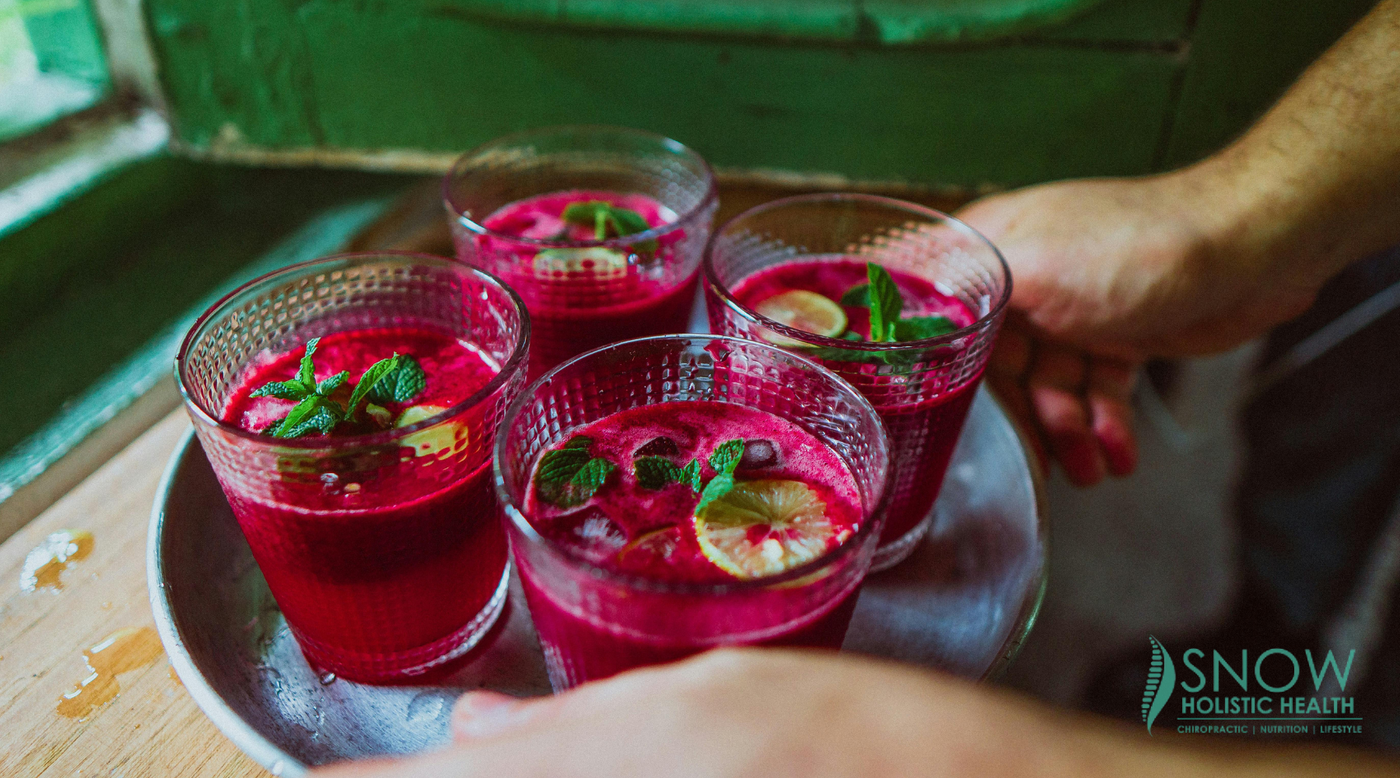
Beet juice is exactly what it sounds like: juice from beet roots. Not all beet root juice is the same, however. The antioxidant and nutrient content can vary widely based on freshness, processing, additives, and sweeteners. In fact, where fresh, home-squeezed beet juice can have as much as 700mg of heart-healthy nitrates in one 8oz serving, that number drops to around 550mg per 8oz serving for packaged beet juice.
On average, beet juice contains more polyphenols, antioxidants, and nitrates than beet powder, at least when it’s fresh. Over time, the nutrient content of beet juice can drop, sometimes precipitously, as its components degrade. Time, temperature, and exposure to air can all take their toll.
Beet juice’s other shortcoming? Sugar. An 8oz serving of fresh, home-squeezed beet juice can contain up to 22g of sugar. But if what you’re drinking comes from a bottle or a can, expect that number to be even higher. Even worse: expect little to no fiber.
Beet root powder can be made through grinding, freeze-drying, and/or fermenting beets into a fine powder. This powder can then be added to shakes, smoothies, and yogurts or used in cooking. It can be a great way to add extra nutrition (and a bright pop of natural color!) to treats and beverages.
Although beet root powder may be less nutrient-dense (per serving) than beet juice with as much as 320 mg of nitrates per 16g serving, it tends to retain its nutrient profile over time. This is because beet root powder is typically shelf-stable.
Additionally, beet root powder is often lower in sugar, and retains some of its original fiber content, making it a smarter choice if you’re watching your weight or have high blood sugar.
Because beets provide so many health benefits, from heart health to energy to digestion and gut health, one of our most frequent supplement recommendations is Red Beet Power. It is a concentrated, whole-food, and practitioner-grade powder supplement, and is the most practical choice for adding beets to your health regimen.

Beetroot Powder wins when it comes to convenience, shelf life, and cost per serving. Beet juice is fresh but perishable and pricier. For a daily habit, a concentrated beetroot powder is the practical choice.*
(*These statements have not been evaluated by the FDA.)
A quality beetroot powder concentrates the same whole-food nutrients found in beets and has the added benefit of being easier to take consistently.
Beetroot is the root of the beet plant. It's the part of the plant that we generally eat, make juice from, and what most beet supplements (including Red Beet Power) are made from.
You should look for a concentrated, practitioner-grade, whole-food beet powder. We recommend Red Beet Power in most cases.


